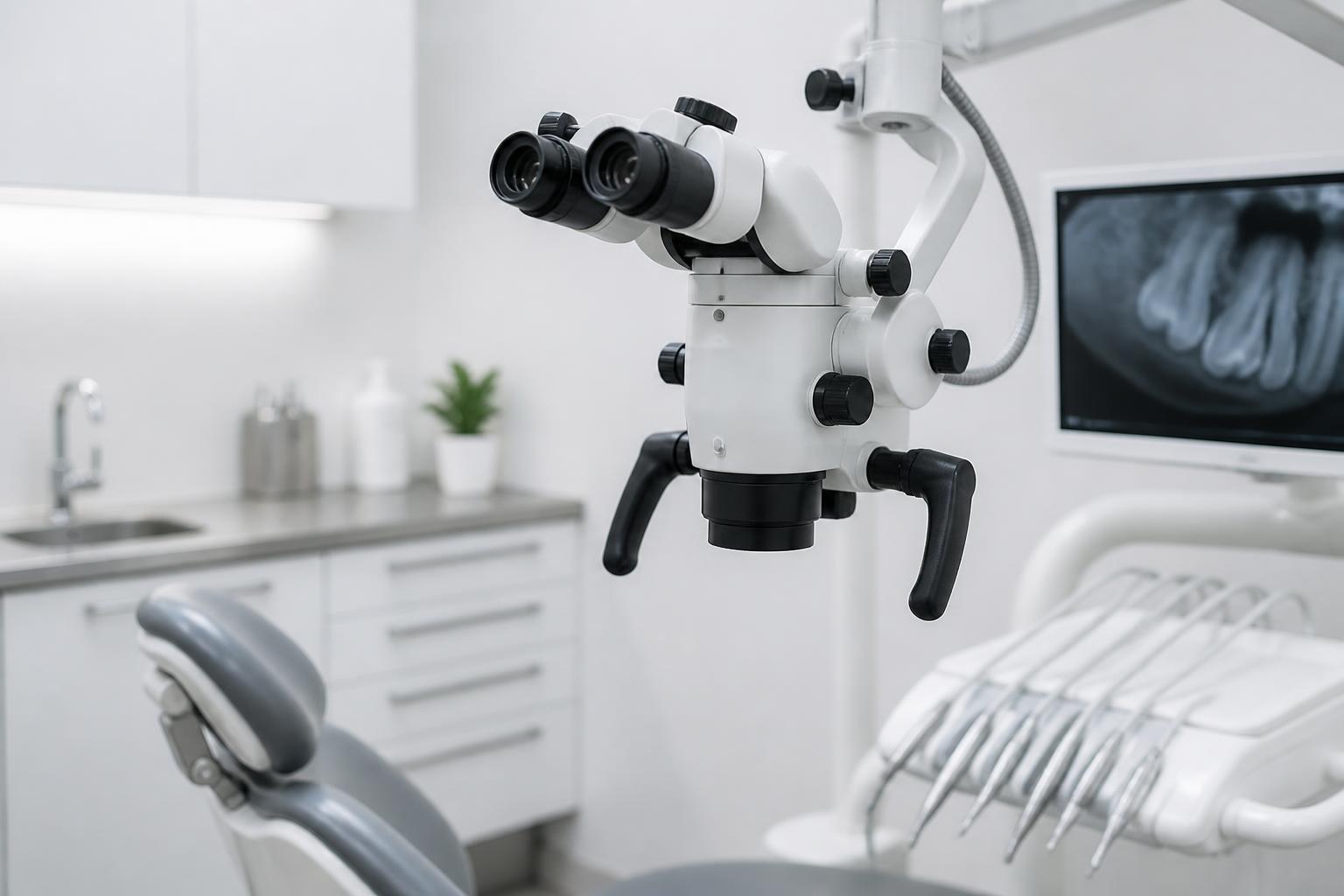
If a tooth aches when you bite, wakes you up at night, or reacts sharply to hot and cold, the problem may be deeper than a simple cavity. When pain starts to linger or swelling appears, you need a careful endodontic evaluation before the tooth becomes harder to save.
At Biodent Clinic in 040039 București, Romania, we assess the source of the discomfort, explain what is happening inside the tooth, and choose the next step with clarity. Endodontie is focused on treating the inside of the tooth so the natural tooth can often remain in place instead of being removed.
Tooth pain does not always stay constant. It may begin as sensitivity when you drink something cold, then progress into a dull ache that returns after meals. Some people notice pressure when chewing, a bad taste near one tooth, or swelling that comes and goes. These are signs that the nerve or root area may be involved.
We look beyond the surface of the tooth. A filling can cover decay, but if the inner tissue is irritated or infected, the problem usually continues underneath. Endodontie addresses that hidden source so treatment is aimed at the tooth that actually needs attention.
Endodontie focuses on the pulp and root canals inside the tooth. When decay, trauma, or repeated irritation reaches that internal space, the tooth may become inflamed or infected. Without treatment, the pain can increase and the tooth may weaken further.
Biodent Clinic uses endodontic care to help preserve teeth that still have a chance of remaining in the mouth. The goal is not to mask symptoms for a short time. It is to remove the source of irritation from inside the tooth and prepare it for long-term restoration when needed.
Caries that reaches the inner chamber can trigger strong sensitivity and pain.
A tooth that has been damaged by biting force or impact may develop symptoms later.
Teeth that have had several restorations sometimes become irritated inside.
When bacteria reach the root area, the tooth may ache, swell, or become tender to pressure.
Every case begins with an exam and a discussion of your symptoms. We check the tooth, surrounding gums, and bite to understand whether the issue is limited to the surface or involves the inner tissues. After that, we explain the plan in plain language so you know what each step is for.
In endodontic care, the inside of the tooth is cleaned, shaped, and prepared so the area can be sealed. The details depend on the condition of the tooth, the amount of damage, and how far the problem has progressed. Some teeth need straightforward care, while others require more involved treatment before they can be restored.
We review the symptoms and examine the tooth and surrounding tissue.
We explain what the tooth needs and what outcome is realistic.
The affected inner space is treated to remove the source of irritation.
The tooth is closed and may later need a crown or other restoration, depending on its condition.
Some dental problems look minor at first but point to a deeper issue. A tooth may appear intact on the outside and still have significant internal damage. That is why persistent pain should not be ignored just because the enamel looks fine in the mirror.
People often try to wait it out when pain comes and goes. With endodontic problems, temporary relief does not always mean the issue is gone. If the same tooth keeps reacting, the root area may still need care.
Many people feel nervous about root treatment because they expect a difficult visit. A calm explanation helps, especially when pain has already made the tooth area feel tense. We take time to describe what is being treated and why, so the process feels less uncertain.
BioDent Clinic is structured around individualized care. That matters in endodontie because no two teeth present the same way. Some need a straightforward approach, while others require careful planning to protect the tooth and support the restoration that follows.
Once the inner part of the tooth has been treated, the next stage is protecting it from future strain. A tooth that has had endodontic care may be more vulnerable than before, especially if a large portion was already affected by decay or fracture. That is why follow-up restoration is important when recommended.
We also explain what changes to expect after treatment. Mild sensitivity can happen while the area settles, but worsening pain, noticeable swelling, or a return of strong pressure are signs that the tooth should be reviewed. Clear aftercare guidance makes it easier to protect the work that has been done.
People often seek endodontic treatment when they want a practical answer instead of repeated temporary fixes. At Biodent Clinic, we focus on understanding why the tooth hurts and whether preserving it is still a realistic option. That approach helps avoid unnecessary delay when a deep problem is already present.
Our location at Splaiul Unirii 108, 040039 București, Romania, makes it convenient for patients who want structured dental care in the city. If you are dealing with tooth pain, ongoing sensitivity, or a tooth that has not settled after previous treatment, endodontic evaluation can be the next sensible step.
Pain that lingers after temperature changes, hurts when biting, or returns to the same tooth repeatedly often points to a deeper internal problem. An exam is needed to confirm the source.
In many cases, yes. If the tooth structure is still usable and the damage has not progressed too far, treatment may help preserve the natural tooth.
No. Some teeth with internal damage show only slight sensitivity, discoloration, or tenderness around the gums before pain becomes stronger.
The irritation can continue deeper into the root area, which may lead to more pain, more damage, and fewer options for keeping the tooth.
Often, yes. Once the inner part of the tooth is treated, the tooth may need further restoration to protect it from chewing forces and future breakdown.
As soon as the same tooth keeps reacting or pain becomes persistent. Early evaluation gives more room to plan careful treatment and may help preserve the tooth.
If a tooth is sending repeated warning signs, do not wait for the discomfort to settle on its own. Endodontie can be the difference between keeping a natural tooth and losing it to a deeper problem.
Contact Biodent Clinic at +40752498601 to arrange a consultation in 040039 București, Romania, and let us assess the tooth before the issue spreads further.
Start Your Visit
Tell us what you need help with, whether it is a routine checkup, cosmetic improvement, or treatment for a dental problem. Our team can guide you toward the right next step.